Value in Madrid is not a figure: it is a process
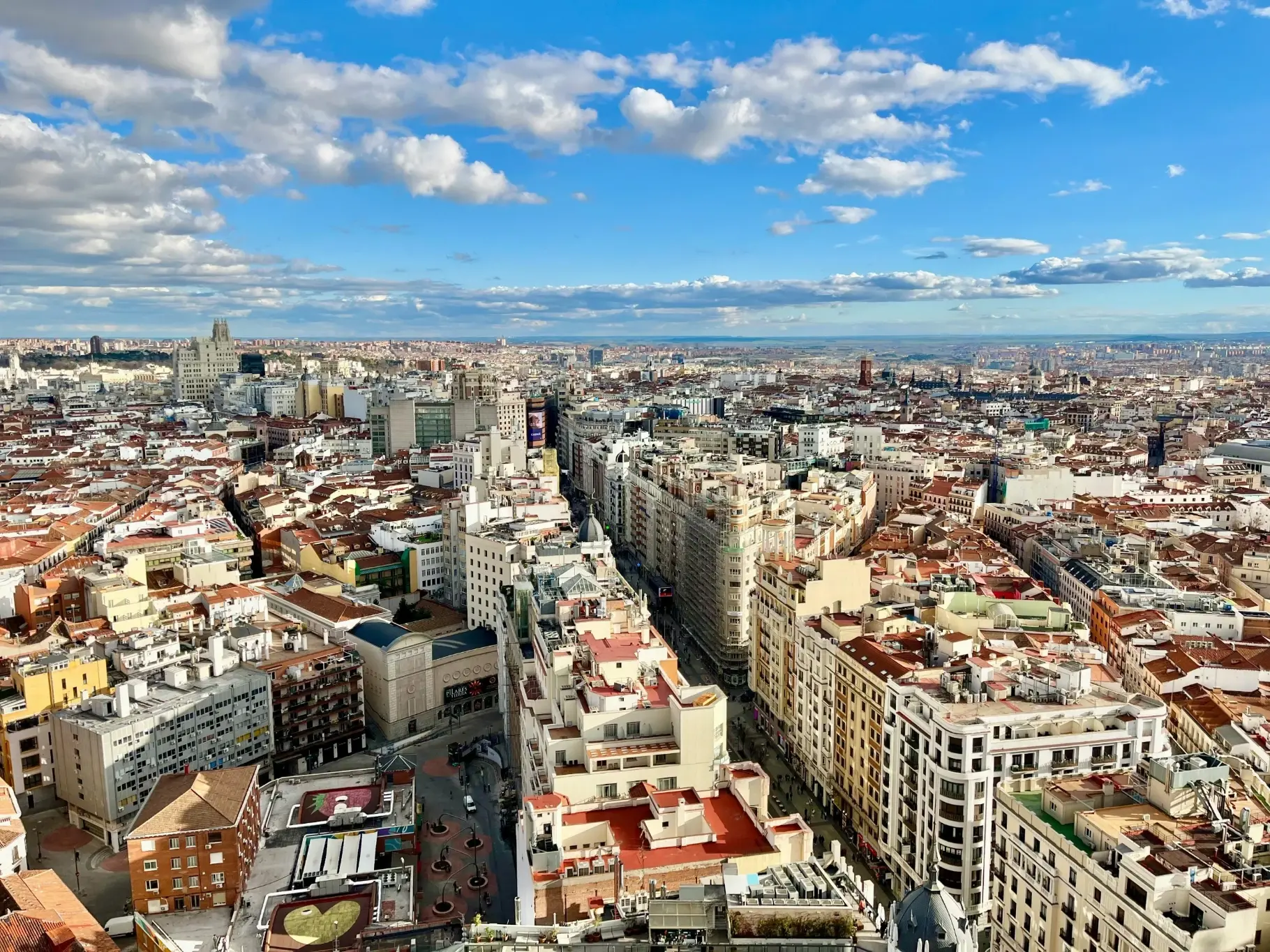
Madrid is one of the most complex property markets in Europe, not only because of the scale of its supply or the depth of its demand, but because of the speed at which certain parts of the city transform their socio-economic character. What a decade ago was a mid-market residential outskirt may today attract international developers, high-end buyers and signature restoration projects. What is now seen as an area in transition may, within five to ten years, compete with the standards of the capital's most established neighbourhoods.
For a buyer with a long-term wealth perspective, the relevant question is not only where value lies today, but where tomorrow's value is being built. This distinction radically changes the search: it is no longer about identifying the most expensive or best-known neighbourhood, but about understanding the mechanisms that drive appreciation and spotting the areas where those mechanisms are being triggered, before the market fully prices them in.
This analysis is not speculation: it is a reading of the urban fabric. And it is precisely the kind of reading that separates a strategic purchase from a reactive one.
1. What really defines an emerging neighbourhood: potential, not a low price
The term "emerging neighbourhood" is used far too often as a synonym for "cheap". It is a conceptual error that leads people to confuse a low price with appreciation potential, when in reality they are different and often independent variables. A neighbourhood may have low prices for structural reasons that will not go away: poor accessibility, low-quality building stock, a lack of key services or a socio-economic environment that is not evolving. None of these factors generates appreciation on its own.
An emerging neighbourhood, in technical and wealth terms, is one where indicators converge that anticipate a structural change in how the market perceives it: not just a one-off rise in prices, but a genuine transformation of its residential appeal and its position in the city's urban hierarchy. Identifying these indicators before they are widely recognised is at the heart of any intelligent property investment strategy.
The factors that genuinely anticipate appreciation are the following:
Strategic location relative to established areas
Geographical proximity to prime areas does not guarantee appreciation, but it is a necessary condition. Cities grow and transform concentrically: value radiates from high-demand cores towards adjacent areas as supply in the cores runs out or becomes so expensive that it excludes significant segments of buyers. A neighbourhood bordering an established high-end area is well placed to absorb part of that displaced demand, especially if its urban fabric lends itself to restoration or renewal.
Public investment in infrastructure and public space
Public intervention in a neighbourhood (whether through new metro lines, the redevelopment of shopping streets, the recovery of green spaces or improvements to public space) is one of the most reliable indicators of imminent appreciation. Public investment narrows the gap in urban quality with more established areas and acts as a signal for private investment. In Madrid, examples of transformation driven by improved infrastructure are numerous and well documented.
Transformation of the retail and cultural fabric
The arrival of quality restaurants, coworking spaces, galleries, architecture or design studios and mid-to-upmarket independent shops is an early indicator of demographic change. These businesses do not set up at random: they respond to emerging demand, usually from young, highly qualified professionals, which precedes rising residential prices. Retail works as the neighbourhood's socio-economic thermometer.
Demographic change and the profile of new residents
A change in the profile of those who choose to live in a neighbourhood is arguably the most robust indicator of long-term transformation. When an area begins to attract residents with greater purchasing power, higher levels of education, or creative and international profiles, a cycle of demand is set in motion that pushes prices up and improves the overall perception of the area. Once under way, this process is hard to reverse, which gives it a solidity that other indicators do not always have.
Structural shortage of supply
Limited land available for new construction, whether due to an established urban fabric, heritage protection or restrictive planning rules, acts as a multiplier of appreciation potential. When supply is limited, rising demand feeds directly into price. This factor is particularly relevant in historic neighbourhoods and highly built-up areas inside the M-30 ring road.
2. The relationship between prime and emerging neighbourhoods: how value spreads in Madrid
Understanding how cities grow is the starting point for understanding why certain neighbourhoods appreciate. The urban property market is not static: it responds to demand pressures, economic cycles, planning decisions and cultural shifts that continually alter the hierarchy of areas and the appeal of each one.
In Madrid, the prime market has historically acted as a source from which value radiates. The great hubs of international demand (Recoletos, Castellana, Almagro, Jerónimos and the Barrio de Salamanca as a whole) have served as benchmark areas whose saturation and rising prices progressively push demand towards adjacent areas with less price pressure but comparable or improvable urban conditions. This phenomenon is not unique to Madrid: it is the pattern that has shaped the transformation of neighbourhoods in London, Paris, Berlin and Lisbon over recent decades.
The pull effect of established areas shows itself in two ways: on the one hand, through the displacement of demand that cannot, or will not, pay prime market prices; on the other, through the extension of perceived appeal to neighbouring areas that share some of the urban qualities of the benchmark area. This dynamic is especially visible in Madrid when looking at the evolution of neighbourhoods that are now considered prime but were areas in transition twenty years ago. The various property types, buyer profiles and areas that define the capital's established market today, from the stately apartments of Chamberí to the urban villas of Chamartín and the large gated communities of the north-west, illustrate how that hierarchy has been built over time, and how the criteria for analysing it have evolved with it. A detailed analysis of the current hierarchy can be found in our expert guide to Madrid's premium areas by buyer type, which sets out the profiles, prices and arguments for each established area from an architectural and wealth perspective.
Understanding that hierarchy is essential for identifying the emerging neighbourhoods with the most room to grow: those positioned to follow the same path as those areas did, starting from conditions similar to the ones they had when their transformation began.
3. Madrid's emerging neighbourhoods with the greatest potential: an area-by-area analysis
What follows is neither a ranking nor a list of trends: it is an analysis of the areas where the indicators of transformation described above converge most strongly. Each neighbourhood has its own logic, and its appreciation potential depends on the specific combination of factors acting upon it.
Tetuán: from working-class district to focus of emerging demand
Tetuán is probably the most representative case of rapid urban transformation in Madrid in recent years. Located north of Chamberí, one of the capital's prime districts, and with excellent metro connections and access to the city's main arteries, Tetuán has seen a gradual renewal of its retail, dining and cultural scene over the last decade, attracting residents who are younger, more international and wealthier than the neighbourhood's traditional population.
The housing stock is varied: from mid-20th-century buildings suitable for full renovation to a few new developments whose prices already reflect the new demand. The price gap per square metre compared with Chamberí or Almagro remains significant, which means the potential appreciation gap has not yet closed. The risk lies precisely in how quickly that gap is narrowing: those who buy late will pay for much of the capital gain.
Carabanchel and Usera: growing investor interest in the south
For decades, southern Madrid operated with a price and perception gap relative to the north that had more cultural and historical roots than urban ones. That gap is narrowing structurally. Carabanchel, in particular, offers conditions that ten years ago would have been hard to associate with an emerging investment neighbourhood: good connections to the centre, a major urban park, low-density fabric suitable for conversion, and growing demand from buyers who value space and price over absolute centrality.
Usera, for its part, has undergone a remarkable cultural transformation, driven partly by its international community, mainly Asian, which has created a dining and retail scene with a distinctive identity and turned the neighbourhood into a destination in its own right within the city. This unique cultural identity, combined with prices that are still far from those of prime areas, makes it an area of interest for investors willing to read trends early.
Vallecas and the south-east corridor: infrastructure as a catalyst
The development of south-east Madrid, driven partly by the extension of the metro network, investment in road infrastructure and the activity of the large business campuses in that direction, has generated residential demand that has not yet fully translated into prices. Vallecas has an established residential fabric with prices per square metre among the lowest in the municipality, but with connectivity and accessibility that, in other European cities, would already have generated stronger upward pressure.
The potential of this area depends in part on an external variable: how quickly Madrid consolidates its south-east as a hub of economic and residential activity. If that consolidation happens, and there are indicators pointing in that direction, the current price gap with equivalent areas in the north or north-west will be hard to justify in the long term.
Fuencarral-El Pardo and the residential north: the expansion of suburban luxury
At the other end of the spectrum, northern Madrid has areas with a different kind of emergence. Fuencarral-El Pardo is home to some of the largest, highest-quality developments of recent years, such as Arroyo del Fresno and Monte Carmelo, which have attracted buyers seeking a combination of green surroundings, access to the centre and contemporary building standards at lower prices than the more established private gated communities of the north-west.
As La Moraleja, El Encinar and Ciudalcampo, the great benchmarks of suburban luxury north of Madrid, maintain or raise their prices and limit their available supply, buyers widen their search to areas offering similar standards at a lower entry cost. Fuencarral and its more recent residential developments are absorbing part of that displaced demand.
Arganzuela and Legazpi: the revival of a converted industrial axis
The transformation of the Arganzuela-Legazpi axis over the last two decades is one of the most significant urban regeneration processes in Madrid. What was once industrial and logistics land has become a high-quality cultural and residential axis, anchored by Matadero, Madrid Río park and a range of public space that hardly exists anywhere else in the capital at comparable house prices.
Legazpi, in particular, still shows a price gap relative to neighbourhoods with similar urban conditions, such as Retiro and Jerónimos, which does not seem sustainable in the long term. Proximity to the river, green space, connectivity and the gradual improvement of the retail offer point to a convergence of prices that the most attentive investors have already begun to factor into their analysis.
4. Risks and opportunities: the difference between promise and reality
Investing in emerging neighbourhoods involves a different risk-return equation from investing in established areas. The greater potential for appreciation is real, but so are the specific risks of this type of transaction. Ignoring them is not prudence: it is a lack of analysis.
The problem of timing
The greatest risk in anticipatory investment is timing: buying too early, before the catalysts are triggered, can mean years of poor returns or even losses in the intermediate phases. Buying too late, when the market has already recognised the potential and priced it in, cancels out the advantage of anticipation. The window of opportunity in an emerging neighbourhood is often narrow, and identifying it requires continuous monitoring of the market, not just a one-off reading.
The difference between social dynamism and asset appreciation
Not every neighbourhood with an emerging cultural scene or visible retail transformation becomes a high-performing asset. In some cases, gentrification stalls or slows for structural reasons (low-quality building stock, weak demand to buy rather than rent, residents with limited ability to pay) that limit the scope for appreciation. A superficial reading of social signals can lead people to mistake an interesting neighbourhood for a profitable one, and they are not always the same thing.
Quality of the individual asset versus the area trend
Even in the areas with the greatest appreciation potential, the quality of the individual asset remains decisive. A property with structural problems, legal constraints or a building in poor condition may be left out of its area's appreciation cycle, particularly as buyers begin to demand higher quality standards precisely because the neighbourhood is improving. The appreciation of the area does not automatically correct the defects of the asset.
Regulatory and planning risk
In some emerging areas, the pressure of urban transformation has prompted regulatory responses that affect investment potential: restrictions on holiday rentals, limits on altering façades in protected settings, moratoriums on changes of use, or pending planning decisions that create uncertainty about the area's future development. Reviewing the planning framework for the area before any transaction is not a formality: it is an essential condition for a safe investment.
5. A wealth perspective: investing before the market recognises it
The logic of anticipatory property investment rests on a seemingly simple principle: the market tends to value the real changes taking place on the ground with a delay. Urban transformation, demographic change and infrastructure investment affect property values in ways that take years to be fully reflected in transaction prices. Those who identify these changes before they are priced in gain access to a return premium the market has not yet collected.
This logic is not speculative in the conventional sense. It is not about betting on an unfounded price rise: it is about building a solid investment thesis based on objective indicators and a rigorous analysis of the mechanisms that create value in the urban market. The difference between speculation and well-founded anticipation is precisely the quality of the analysis behind the decision.
In the specific context of Madrid, this strategy has an additional advantage: compared with other European capitals, the city remains a market where the price gap between prime and emerging areas is considerable. In London and Paris, that gap has narrowed significantly in recent decades, reducing the scope for anticipation. In Madrid, price differences between neighbourhoods with comparable urban conditions remain wide enough for an anticipatory strategy to make sense from a purely financial point of view.
Anticipation does, however, require patience and a long time horizon. Investors seeking immediate returns in an emerging neighbourhood may find that the market takes longer than expected to recognise the value they have identified. The optimal horizon for this type of investment in Madrid is usually between five and fifteen years, depending on the area and how far its transformation has progressed at the time of purchase.
The most rigorous way to build this perspective into decision-making is to combine the area's appreciation potential with the asset's current return (whether from own use or rental income) and the total cost of ownership. Only when these three factors are analysed together is it possible to judge whether an investment in an emerging neighbourhood offers a better risk-return profile than an equivalent investment in an established area.
Madrid will keep transforming: the value lies in understanding the process
The neighbourhoods seen as emerging in Madrid today will not remain so indefinitely. Some will complete their transformation and join the city's prime hierarchy; others will settle at an intermediate level; and some will never realise the potential attributed to them today. The difference between these scenarios is not a matter of chance: it depends on the genuine convergence of the factors that create value (infrastructure, demand, quality of building stock, socio-economic dynamism, planning framework) and on the investor's ability to judge, with technical rigour, which of those factors are actually present and which are merely market narrative.
Madrid has a feature that sets it apart from many European markets in this respect: its urban fabric is extraordinarily diverse, with areas of very high heritage value just a short distance from areas whose prices are still far from their objective potential. This diversity creates a map of opportunities that does not exist in cities where value is more evenly distributed, but it also demands granular market knowledge that cannot be replaced by aggregate statistics or a superficial reading of press headlines.
Investing in Madrid's emerging neighbourhoods is therefore neither a simple strategy nor one suited to every investor profile. It is a strategy that rewards knowledge, patience and technical and urban analysis. And, when executed with sound judgement, it is one of the most efficient ways to build real estate wealth in a city that has shown for decades that its luxury market is one of the most solid and resilient in Europe.
Technical judgement to identify opportunities ahead of the market
At GV Real Estate, our architects and wealth advisers continuously analyse the evolution of the Madrid market: not only transaction data, but the urban, demographic and regulatory indicators that anticipate shifts in value. If you are considering a long-term investment in Madrid, whether in established areas or in areas with appreciation potential, we can offer you an analysis tailored to your investor profile and your wealth objectives.

