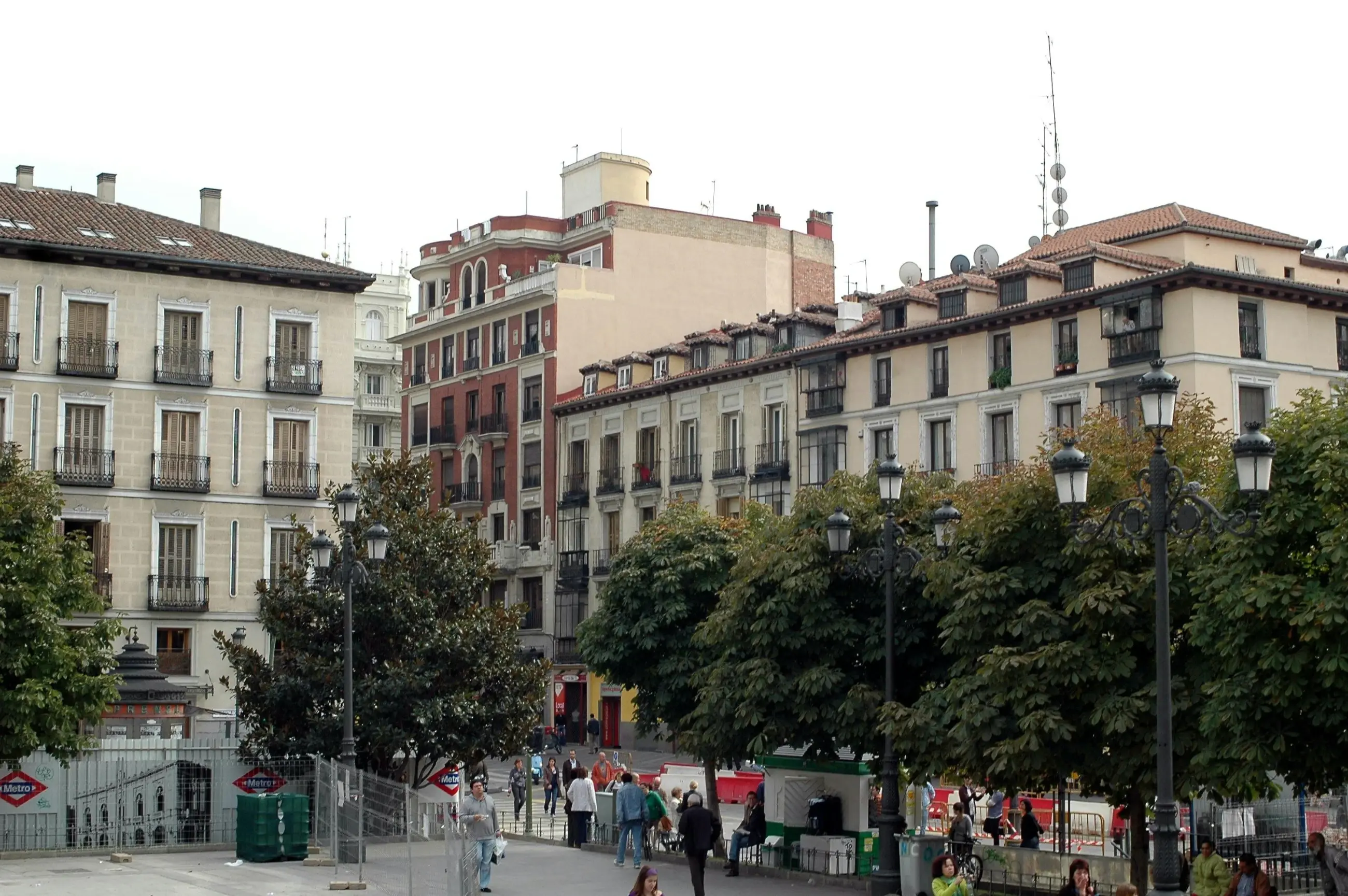
International residential capital does not arrive in Madrid indiscriminately. It arrives with criteria, and those criteria draw a map that has little to do with the "fashionable city" image circulating in the mainstream press. A Venezuelan buyer seeking prestige and legal certainty, an American family whose decision revolves around an American school and a German investor who assesses a building by its energy certificate before its address all operate in Madrid, but they rarely compete for the same property.
Understanding that difference is what separates an efficient search from months wasted viewing areas that never suited the profile. Not all international buyers are looking for the same thing, and not all areas of Madrid are equally relevant to each of them. This article walks through that map: which profiles arrive, which areas concentrate their demand and why.
It is worth anchoring the discussion with a figure. Foreign buyers account for around 10-12% of all sales in the Community of Madrid according to data from the INE and the General Council of Notaries, a proportion that rises markedly in the prime segment (homes above €500,000), where the international presence is structural rather than cyclical. Since 2022, that demand has grown steadily and has kept its momentum even after the recent regulatory changes.
From there, the market is organised around two almost opposite logics. In the prime central areas, prestige, built heritage and urban connectivity come first. In the high-end periphery the opposite applies: privacy, space, a garden and proximity to international schools. Before entering either of them, and even before setting a budget, as detailed in our guide to buying a luxury home in Madrid, it is worth knowing which logic each profile follows.
The international buyer in Madrid is not a single profile
"The international buyer" is a convenient abstraction and, in practice, a misleading one. Under that label coexist profiles with budgets, priorities and area logics so different that treating them as a homogeneous block is the first mistake of any market analysis. Before talking about areas, then, it is worth establishing who is buying.
The largest group in the high-value segment is Latin American: Venezuelans, Colombians, Mexicans and Argentinians, with a clear preference for well-connected central areas and for sizeable homes in restored classic buildings. This buyer values Spanish legal certainty almost as much as the property itself, and rarely does without generous usable floor space. Cultural proximity and a shared language shorten their adaptation curve, which translates into relatively swift decisions when the product fits.
The northern and central European profile (Germans, British, French, Scandinavians) operates with a more technical logic. They buy as a long-term asset investment or as a second home, and before looking at the address they assess the building's architecture, its energy certificate and the planning traceability of the asset. This is the buyer who asks about the age of the electrical installation before the neighbourhood, and who tends to look at Chamberí, Almagro and the Recoletos-Castellana axis, where construction quality goes hand in hand with location.
American and Canadian buyers lean mainly towards two extremes: highly prestigious central areas or the periphery with an American international school nearby. When the decision is driven by the children's schooling, something common among families relocated for work, Pozuelo, La Moraleja and the Boadilla area take on a relevance that no central area can match.
Finally, buyers from the Middle East and Asia, smaller in volume but present in the ultra-luxury segment, look for exceptional estates of more than 500 m², large plots and maximum privacy. Their radius of interest is concentrated in La Moraleja, La Finca and certain properties on the north-west axis, where the asset is measured in exclusivity rather than in square metres.
By intended use: main residence, second home and long-term investment
A second variable, often more decisive, overlays origin: the use to which the home will be put. The same French buyer may look at different areas depending on whether they intend to live there permanently, spend seasons there or add the property to an investment portfolio. A main residence prioritises school, connectivity and services; a second home tolerates more unusual locations in exchange for character; and pure asset investment looks at future liquidity and scarcity of product before immediate comfort. Anyone advising an international buyer needs to answer this question before proposing a single address.
The prime central areas: where the international buyer enters first
For most international profiles, the first contact with Madrid takes place in its prime centre. It is the most recognisable area from abroad, the one that appears in the rankings, the one the buyer has already half identified before landing. But this "prime centre" is not homogeneous: within a radius of barely three kilometres there are submarkets with clearly differentiated prices, property types and demand profiles.
Barrio de Salamanca: the asset with the greatest international recognition
The Barrio de Salamanca (Recoletos, the southern stretch of the Castellana, Goya, Lista) is the Madrid residential asset with the greatest international recognition, and the area where the internationalisation of buyers is most visible. The best streets move within a range of between €9,000 and €11,700/m², and foreign demand is very strongly concentrated in apartments of 200 to 400 m² with a high-end full renovation. The structural scarcity of quality product in this area acts as a floor for prices: there is more capital willing to buy well than there are properties renovated to the required standard.
From an architectural perspective, what the international buyer is looking for here is not just the address. It is the stately entrance hall, ceiling heights above three metres, the protected early twentieth-century façade and the proportions of the main rooms. An apartment with an aesthetically correct renovation but obsolete installations is of far less interest to this profile than one with a well-executed full renovation. That is why it is worth cross-referencing the choice of area with the buyer profile: our map of Madrid's premium areas by buyer profile develops that correspondence in detail. Anyone wishing to explore available product can review the homes for sale in the Barrio de Salamanca to gauge what is really moving in each price bracket.
Retiro and Jerónimos: quality of life and cultural heritage
The Jerónimos neighbourhood and the area around Retiro follow a different logic. Here the attraction is not pure prestige, but the combination of cultural heritage and quality of life: proximity to the Prado Museum, direct access to the park, the low-density classic building. It is an area that particularly attracts European buyers who put surroundings and quiet before showing off an address, and who accept paying for a scarcer type of property. Product is limited and rarely comes onto the open market, which explains why many transactions close before reaching the mainstream portals.
Chamberí and Almagro: the most technical European profile
Chamberí, with Almagro, Trafalgar and the Rosales area, is the territory of the most technical European buyer. With indicative prices of between €6,500 and €8,500/m², it is less visible than Salamanca in the international rankings, but extraordinarily solid in qualified demand. The buyer who chooses Almagro usually values the building's construction quality, ceiling height, orientation and the coherence of the restoration above the prestige of the label. In many ways, it is the submarket where the architectural eye of the buyer and that of the adviser coincide most naturally.
El Viso and the Chamartín area: the colonias of the centre-north
There is a third territory in the centre-north that is often overlooked yet concentrates very specific international demand: the low-density colonias (garden-house enclaves) of the Chamartín district, led by El Viso. It is the option for the buyer who wants a house (a hotelito or colonia home with a garden) without giving up centrality or proximity to the Castellana axis. For international families who rule out the periphery but need more than an apartment, the offer in El Viso occupies a niche that is hard to replicate anywhere else in Madrid: a plot, privacy and the character of a colonia fifteen minutes from the Barrio de Salamanca.
The high-end periphery: privacy, space and an international school
The second major vector of international demand does not look towards the centre, but in exactly the opposite direction. These are families, often with school-age children, who prioritise space, a garden, privacy and an international school nearby, and for whom an apartment in Salamanca, however excellent, does not solve their life equation. It is a completely different profile from that of the centre, and it deserves an equally rigorous analysis.
La Moraleja and the northern axis: the villa model for international families
La Moraleja, together with the neighbouring El Soto de La Moraleja and El Encinar de los Reyes, is the most internationally recognised garden-city model around Madrid. Large plots, private gated communities and a network of leading international schools (from Colegio SEK to King's College School) within reasonable distance explain why it concentrates a substantial share of demand from high-end Latin American buyers and Middle Eastern profiles. The most sought-after properties move within a range of between €4,500 and €7,000/m². What an architect reviews here has nothing to do with what they would examine in Almagro: the orientation of the main rooms, visual privacy from the road and neighbouring plots, the integration of interior and exterior and the condition of the perimeter enclosure determine the real value of the home far more than any interior finish. To get an idea of the available product, it is worth reviewing the offer in La Moraleja.
La Finca and Pozuelo: the most sought-after asset in the luxury periphery
La Finca, in Pozuelo de Alarcón, sets the highest quality standard in Madrid's residential periphery: a private gated development with restricted access, quality contemporary architecture and a degree of exclusivity that makes it the benchmark for the international buyer who already knows the market and is looking for the most exceptional asset in the north-west arc. The rest of Pozuelo (Monte Alina, Monteclaro, Prado Largo, Monte Príncipe) combines size, construction quality and proximity to international schools, with indicative prices between €3,800 and €5,900/m². That equation makes it one of the areas with the highest international demand outside the central business district.
The north-west corridor: Aravaca, Puerta de Hierro, Boadilla and Majadahonda
Boadilla del Monte and Majadahonda form the second tier of the high-end periphery. This is the territory of the family profile with a somewhat tighter budget, or one that simply prioritises space and surroundings over prestige. Closer to the city, the Aravaca and Puerta de Hierro axis offers a middle ground highly valued by international buyers: a plot and privacy a few minutes from the centre and close to some of the leading international schools in the north-west arc, with the British Council School at the top of the list. Without the exclusivity of La Finca or the brand recognition of La Moraleja, this whole corridor offers a balance between square metres, quality of development and access to schools that keeps it firmly on the radar of international demand.
The factors that shape the international buyer's choice of area
Beneath origin and use, a series of drivers cut across the decision and explain, better than any ranking, why a buyer chooses one area and rules out another.
The first, and the most powerful for families, is the international school. Many area decisions are made with the school as the fixed variable and everything else as the dependent variable. King's College School in La Moraleja, the schools around the American School of Madrid and Colegio Brains in the north-west arc, or the bilingual and Montessori offer along the Chamartín axis, define catchment areas that shape demand more strongly than price itself. Those who have settled the schooling question rarely negotiate on the area.
The second is air connectivity. For a buyer with a busy international schedule, reasonable proximity to Barajas airport is not a detail but a genuine selection criterion. La Moraleja, Las Tablas and the north of Madrid in general have an objective advantage on this point over the southern or western periphery.
The third is contextual, but worth mentioning: legal certainty and tax stability. International buyers choose Spain, and within Spain Madrid, precisely because of a solid legal framework, comparatively stable taxation and reliable land registry documentation. It is a factor that operates at the level of city against city, not neighbourhood against neighbourhood, but it underpins all demand.
The fourth is relative price. Madrid remains between 30% and 50% cheaper than London or Paris in the comparable segment. That differential has a direct impact: it tips the balance towards buying rather than renting and, above all, increases the size of the asset that the same budget can buy. Capital that would stretch to a modest apartment in another European capital reaches a prestigious home in Madrid.
What kind of home the international buyer is looking for: the architectural reading
This is where it is worth speaking plainly, as architects. In the prime centre, international buyers value early twentieth-century buildings with a stately façade, ceiling heights above three metres and a classic layout reinterpreted through a full renovation (a qualified open plan that opens up the spaces without destroying the building's original logic) with quality joinery. Homes without a well-executed full renovation attract little interest from this profile, however excellent the address.
Floor area sets a clear threshold. For the prime international profile, rarely below 150 m²; Latin American and North American buyers tend to look for between 180 and 350 m² in an apartment, or a house of 400 to 600 m² built area in the periphery. Below those figures, the asset simply does not enter their decision frame.
The condition of the installations is the other major filter, and here the northern European buyer is particularly demanding: home automation, quiet climate control, underfloor heating and real energy efficiency. They do not accept a cosmetic renovation on top of obsolete installations, and they spot the difference quickly.
In the periphery, the criteria change completely. An architect reviews four factors before validating a home for an international client: the quality and orientation of the garden, the orientation of the main rooms, visual privacy from the street and the neighbours, and the condition of the plot's perimeter enclosure. A villa that is impeccable inside but visually exposed or poorly oriented loses real value regardless of its finishes.
The real weight of international demand in the Madrid market
Without data, all of the above is perception. With data, it is analysis. It is therefore worth establishing the real scale of the phenomenon.
According to data from the General Council of Notaries and the INE, foreign buyers account for around 10-12% of all sales in the Community of Madrid. In the prime segment (homes above €500,000) that percentage is significantly higher, to the point that in certain areas international demand stops being a complement and becomes a structural mainstay of the market. The most active origins in Madrid's luxury segment are Latin America (Venezuela, Colombia, Mexico), Europe (France, Germany, the United Kingdom), the United States and the Middle East.
Recent developments help explain the current moment. International demand in Madrid grew steadily between 2022 and 2024, driven in part by the Golden Visa regime. The timeline is worth clarifying, as there is a great deal of confusion about it: the Government announced its intention to abolish the property route in April 2024, the law was passed in December of that year and came into force on 3 April 2025, since when visas are no longer granted for property investment. What matters for the market is that the abolition has not caused a structural fall in demand: the underlying reasons (quality of life, legal certainty, relative price) continue to operate regardless of the residency incentive, which was never the main one in the luxury segment.
The effect on prices is measurable in the areas with the highest concentration of foreign buyers. In Salamanca, La Moraleja and La Finca, the pressure of international demand acts as one of the factors that support prices against general falls in demand, and explains why these submarkets behave with a resilience not shared by other areas of the city. Anyone wishing to test this dynamic against specific product can review the selection of luxury homes in Madrid available in each submarket.
The international buyer in Madrid is not looking for just one thing. They look for prestige or privacy, the centre or a garden, built heritage or a school fifteen minutes away, depending on who they are and why they are buying. That is the underlying thesis: there are very different profiles, with very different area logics, and recognising your own is the first step to avoid wasting time and money on misdirected searches. If the aim is to understand in detail what foreign buyers look for in Madrid beyond the area, which areas concentrate the interest of international investors or how foreign demand affects prices in these areas, the following articles in this series explore each of those questions in depth.

