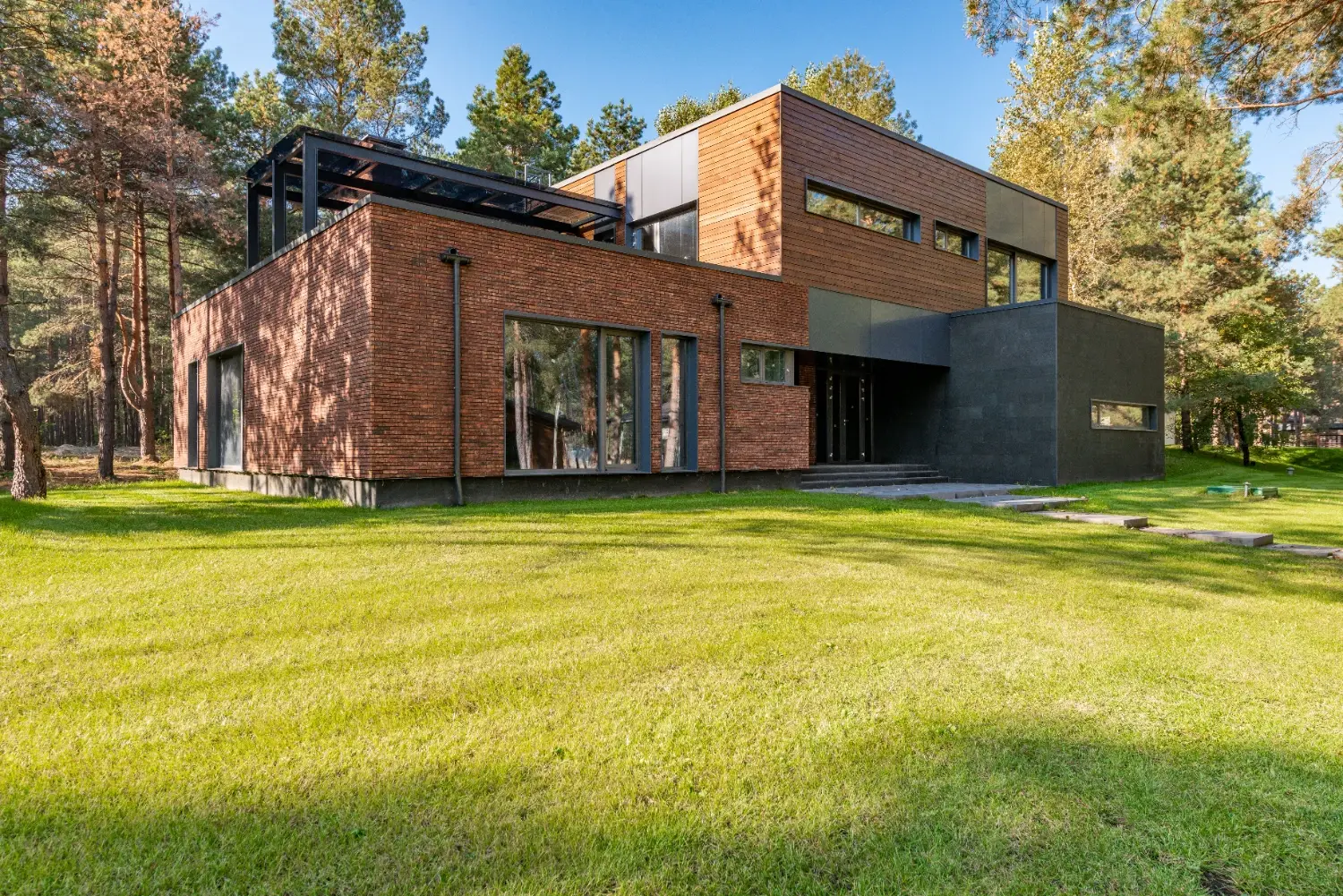
This article closes a series of three. The first set out the conditions under which buying to renovate makes financial and technical sense; the second broke down the real total cost of a renovation, including the items the first quote leaves out. With that framework and those figures on the table, the summarising question remains: given that the destination is the same – a high-quality, finished residential asset in Madrid – do you get there sooner and better by renovating a resale property or by buying new?
It should be said from the outset that the comparison is not symmetrical, and pretending otherwise would be the most expensive methodological error in the whole analysis. In much of prime Madrid there are not two possible answers because there are not two options: new builds simply do not exist in those coordinates. Asking whether to renovate or buy new in Recoletos makes as much sense as asking which metro line to take in a city with only one line. That is why the analysis starts with geography rather than budget: first you have to find out whether the question has two answers.
Nor is the year in the title decorative. The conditions governing this comparison have shifted significantly since 2021, in two directions that point the same way. Construction costs, which many considered to have normalised after the 2022 peak, have risen again; and the price relationship between new builds and resale homes in the city of Madrid has reversed compared with the development boom. The answer given in 2021 is not the right answer today.
All of this builds on the structural differences between buying a new and a resale home in Madrid, which dealt with the comparison between asset types. Here the framing is different: we are not comparing assets, but routes to the same destination.
Geography decides before budget: where the comparison is real and where it is not
The first filter for this decision is not financial. It is cartographic.
In the Barrio de Salamanca, Almagro, historic Chamberí – Trafalgar, Ríos Rosas – the Jerónimos and Ibiza strip of Retiro, the historic Chamartín of El Viso, Hispanoamérica and Ciudad Jardín, and the Justicia and Cortes areas of Centro, building capacity is exhausted and planning does not allow significant new residential construction. There are no plots. What is occasionally advertised as a new build in these areas is usually the full refurbishment of an existing building, which is a different category, priced as a finished product rather than as land.
The consequence is direct: a buyer who wants a high-quality asset in any of those areas does not choose between renovating and buying new. They choose between buying unrenovated and renovating themselves, or buying something someone else has already renovated and paying the margin of whoever took on that process. That is the real comparison in Salamanca or Almagro, and it is a completely different comparison from the one in the title of this article. Anyone who has settled on an area within that perimeter can stop reading here: the answer is to renovate, not because it is better in the abstract, but because it is the only option. It is a pattern you can see by browsing exclusive properties in Madrid: in the established centre, practically all quality product comes from refurbished resale stock.
The comparison is real, however, in a limited set of sub-markets where both routes coexist with product available. Valdebebas, Las Tablas and Sanchinarro, where recent developments sit alongside homes from the 2000s that could be updated. Pozuelo de Alarcón, with its resale stock from the nineties and early two-thousands set against occasional high-end developments in Monte Alina, Monte Príncipe and the Avenida de Europa area. Montecarmelo and Valdemarín, where the comparison concerns detached houses. And the northern Castellana axis, as its developments deliver product.
In these sub-markets the question has two possible answers, and it deserves an analysis based on data. This is where this article does its work.
The cost analysis: full renovation versus new product in the same sub-market
The right metric is not the purchase price, but the cost per square metre of a finished asset of equivalent quality. Comparing the price of an unrenovated resale home with that of a move-in-ready new build is comparing a starting point with a destination, and it always produces the same wrong conclusion: that renovating works out much cheaper.
The renovation route adds up three blocks: the purchase price of the unrenovated property, the acquisition costs – ITP (property transfer tax) at 6% in the Community of Madrid plus notary, Land Registry, administrative agency and due diligence, around 7% to 8% of the price – and the real total cost of the renovation. That third block is the one the naive analysis underestimates: it is not the €900 to €1,500/m² of the building quote, but that figure plus technical fees, ICIO (construction tax) and permit fees, the double-cost period, contingency and overruns due to changes. Modelled rigorously, it falls within a range of €1,500 to €2,200/m² for a prime-quality renovation in Madrid.
The new-build route is quicker to calculate: purchase price plus acquisition costs, which here are VAT (IVA) at 10% and AJD (stamp duty) at around 0.75%, some 10.75% in total. There is nothing more, and that brevity is itself a piece of data in the analysis.
Applied to Pozuelo de Alarcón, where both options coexist and public data is available, the exercise looks like this. The average sale price in the municipality stood at €5,022/m² in April 2026 according to Idealista, with the Pueblo area at €4,414/m² and the Avenida de Europa area at €5,946/m², and a year-on-year rise of close to 10%.
Renovation route – unrenovated 1990s home, 200 m²
Purchase price – €4,400/m²
Acquisition costs (7.5%) – €330/m²
Real total cost of renovation – €1,900/m²
Cost of the finished asset – €6,630/m²
New-build route – quality product in the same sub-market
Purchase price – €5,800 to €6,400/m²
Acquisition costs (10.75%) – €624 to €688/m²
Cost of the finished asset – €6,424 to €7,088/m²
The result is what deserves attention: the two routes converge. Renovation falls within the new-build range, not below it. On a 200-square-metre home we are talking about €1,326,000 via renovation versus €1,285,000 to €1,418,000 via new product. The figures are illustrative and serve to show the method, not to value a property: each specific property shifts the result. But the order of magnitude is correct, and it dismantles the initial intuition.
What tips the balance towards renovation in this picture is a single variable with enough weight: a genuinely discounted entry price. If the unrenovated property is bought 15% or 20% below the area comparable – because the seller is in a hurry, because its condition deters most buyers or because the building has a solvable problem that others cannot assess – renovation wins comfortably. Regularising floor area also adds value: works that legalise undeclared square metres incorporate value that the purchase price did not reflect. What tips the balance towards new build is the opposite: a seller who has already captured the renovation differential in their price, or building costs that soar above forecast. It is also worth placing both routes within the return framework that incorporates both the total cost and the expected capital growth of each option, because entry cost is only half of the wealth equation.
The time factor: when it will be ready in each scenario
After cost, time is what most often decides this choice, and it is also where the two routes are furthest apart.
The renovation route has a reasonably predictable timetable in its structure, though not in its exact duration. From signing the deed, the architectural project takes between one and two months. A major works licence in Madrid takes between three and six, varying with the workload of the district and noticeably longer when the building has planning protection. Execution takes between five and ten months depending on floor area and scope. Then comes handover of the works and the move. The reasonable total ranges from nine to eighteen months from deed to being able to move in.
The new-build route forks. If the product is finished and available, handover is practically immediate after the transfer: two or three months from the deposit contract (contrato de arras), the time needed for the financial and notarial transaction. That is the greatest advantage of this route, and also its limitation, because finished, unsold new product is scarce in the areas of interest and the choice is reduced to whatever remains available. If, on the other hand, the purchase is off-plan, the horizon widens to between eighteen and thirty-six months from signing, with a risk of delay that in residential development is the norm rather than the exception.
Two clear conclusions follow. The first: if the buyer needs to move in within less than nine months, renovation is ruled out without further analysis, because the licence alone can take up that time. The second, less obvious: compared with buying off-plan, renovation has no time disadvantage. A nine-to-eighteen-month process under your own control competes well with an eighteen-to-thirty-six-month one subject to a third party's timetable. New build only clearly wins on time when the product has already been built.
The quality of the result: what each option guarantees and what it cannot guarantee
This dimension has no winner, because each route offers things the other cannot, and no amount of budget turns one into the other.
Renovation provides attributes that cannot be reproduced. Location in areas where new builds do not exist. Ceiling heights of 3.10 to 3.40 metres in the early twentieth-century buildings of Salamanca, Almagro or Chamberí, compared with the 2.65 to 2.80 metres usual in today's developments; a difference in proportion that you notice on entering the home and that no finish can make up for. Uniqueness of the building and the space, with façades, entrance halls and staircases that cannot be replicated. And complete personalisation: every decision on layout, installations and materials is made by the buyer with their architect.
New build provides certainties. The developer's legal guarantees – ten years for structural damage, three for installations, one for finishes – which a renovated resale home does not offer to the same extent. A high energy rating from the outset, without having to fund it within the renovation budget. Certain cost: the price in the deed is the cost, except for any customisation options agreed, because where there are no works there are no unforeseen works. A completion date, albeit with its risk of slippage. And fully up-to-date accessibility regulations for lifts, widths and circulation, something historic buildings rarely meet in full and often cannot resolve without altering protected communal elements.
The useful way to resolve this dimension is not to add up advantages, but to identify which are non-negotiable. When an architect raises this conversation, the first question is not the budget, but which attributes have no substitute for that particular buyer. If the answer includes being in Recoletos or Almagro, renovation is the only path and the cost analysis only serves to decide how much to offer. If the answer includes not managing building works and needing cost certainty, a finished new build is the only path, and the price is either paid or the purchase does not happen. Almost every well-made decision is settled at that point, before reaching the spreadsheet.
Market conditions in 2026: what has changed and what tips the balance
Three factors distinguish the 2026 analysis from the one that would have been appropriate three or five years ago, and they are worth looking at separately because they do not all point in the same direction.
The first is construction cost, and it is the most significant development for this comparison. The widespread idea that building prices normalised after the 2022 peak does not stand up to the data. According to ACR's Direct Construction Costs Index for residential building in the Community of Madrid, costs closed 2025 with a year-on-year rise of 5.46%, to 185.42 points, resuming their upward path after the slight correction of 2023. The full sequence is telling: a fall of 2.4% in 2020, a rebound of 19% in 2021 and 12.7% in 2022, a correction of 0.9% in 2023 and sustained growth since 2024. The index itself anticipates the trend continuing in 2026, attributed mainly to rising labour costs due to a shortage of skilled professionals and to the price of materials such as reinforcing steel. For this decision, the reading is direct: the renovation side becomes more expensive every year, while the price of a finished new build is fixed.
The second is the price relationship between new builds and resale homes, which has turned around. During the development boom from 2019 to 2023, and most notably at the peak of 2021 and 2022, new builds in the city of Madrid came to trade at around 20% above resale homes. Since the third quarter of 2024 the relationship has reversed and resale homes have moved ahead again, with a gap that has stabilised at around 7% to 12% over the last year and a half. Retiro is the extreme case, with resale homes priced roughly 17% above new builds. That shift erodes precisely the assumption on which the renovation strategy rested: that resale is the cheap way in. In 2026, in the sub-markets where new builds are available, that is no longer automatically the case.
The third is the cost of financing, and here the movement favours both routes equally, though renovation slightly more. With Euribor at around 2.76% and the average fixed rate over more than ten years close to 2.57% in April 2026, sustaining the double-cost period during the months of works is significantly less burdensome than it was in 2023 and 2024. Renovation thus recovers part of the viability that rising interest rates had taken away. It does not offset the rise in building costs, but it cushions it.
The balance of the three factors in 2026, in the sub-markets where the comparison is real, tilts somewhat more towards new build than it did five years ago. Not overwhelmingly, and not in every case: renovation still wins when the entry price is genuinely discounted. But renovation no longer wins by default, and anyone choosing it in those areas should be able to explain why with numbers.
The buyer profile: who each option suits
Translated into profiles, the analysis immediately becomes practical.
Renovating is the right decision for those who want a location where new builds do not exist and are not prepared to give it up; for those who value the uniqueness of the space and full control over the design above certainty of outcome; for those who have a horizon of twelve to eighteen months and can absorb it without strain; for those who have the liquidity for the double-cost period without it being critical; for those who see the uncertainty of the unforeseen as a feature of the process rather than an unacceptable risk; and for those who have, or can hire, a technical team to manage the operation on their behalf. If any of these conditions is missing, renovation becomes a source of friction that eats up the margin.
Buying new is the right decision for those who need cost certainty, because the price in the deed is the total cost; for those who need certainty of timing; for those who neither want nor are able to devote sustained attention to a building project for a year; for those who value certified energy efficiency and the developer's guarantees; and for those whose target area coincides with sub-markets where there is quality new supply. None of this is a conservative position or a plan B: it is the right answer for that profile, and renovation cannot give them what they need, however much planning is applied.
There is a pattern that repeats itself in practice: those who come asking whether to renovate or buy new almost always have the area implicitly decided already, even if they have not said so. And once the area is made explicit, the question usually answers itself, because either there are no new builds within that perimeter, or there are and the comparative calculation can be done with real data. It is worth starting there, defining the sub-market using Madrid's residential listings, which can be filtered by area and property type, rather than with the budget.
The summarised answer, for the Madrid of 2026, has two halves. In the highest-value areas – Salamanca, Almagro, historic Chamberí, Retiro, historic Chamartín, Centro – renovation remains the only route, not the preferable one: there is no alternative to compare. In the sub-markets where both routes coexist, the answer depends on the entry price of the resale home and on the properly modelled total cost of the renovation; and when both are calculated rigorously, the gap between the two options turns out to be much smaller than a first estimate suggests, with this year's conditions tilting the balance somewhat more towards new product than in previous years. The three articles in this series complete the framework: the first establishes when the strategy makes sense, the second how much it really costs, and this one closes with the comparison. Beneath them, the more operational lines remain open – how to build the cost-per-finished-metre comparison in a specific sub-market, what specific risks and guarantees buying off-plan carries, and how much real scope for customisation a new-build home allows – as well as a layer this series has touched on without developing: when the problem lies not in the home but in the building, and the necessary works go beyond the private unit. Within the complete buying process in Madrid, this is the decision that most shapes all those that follow.

