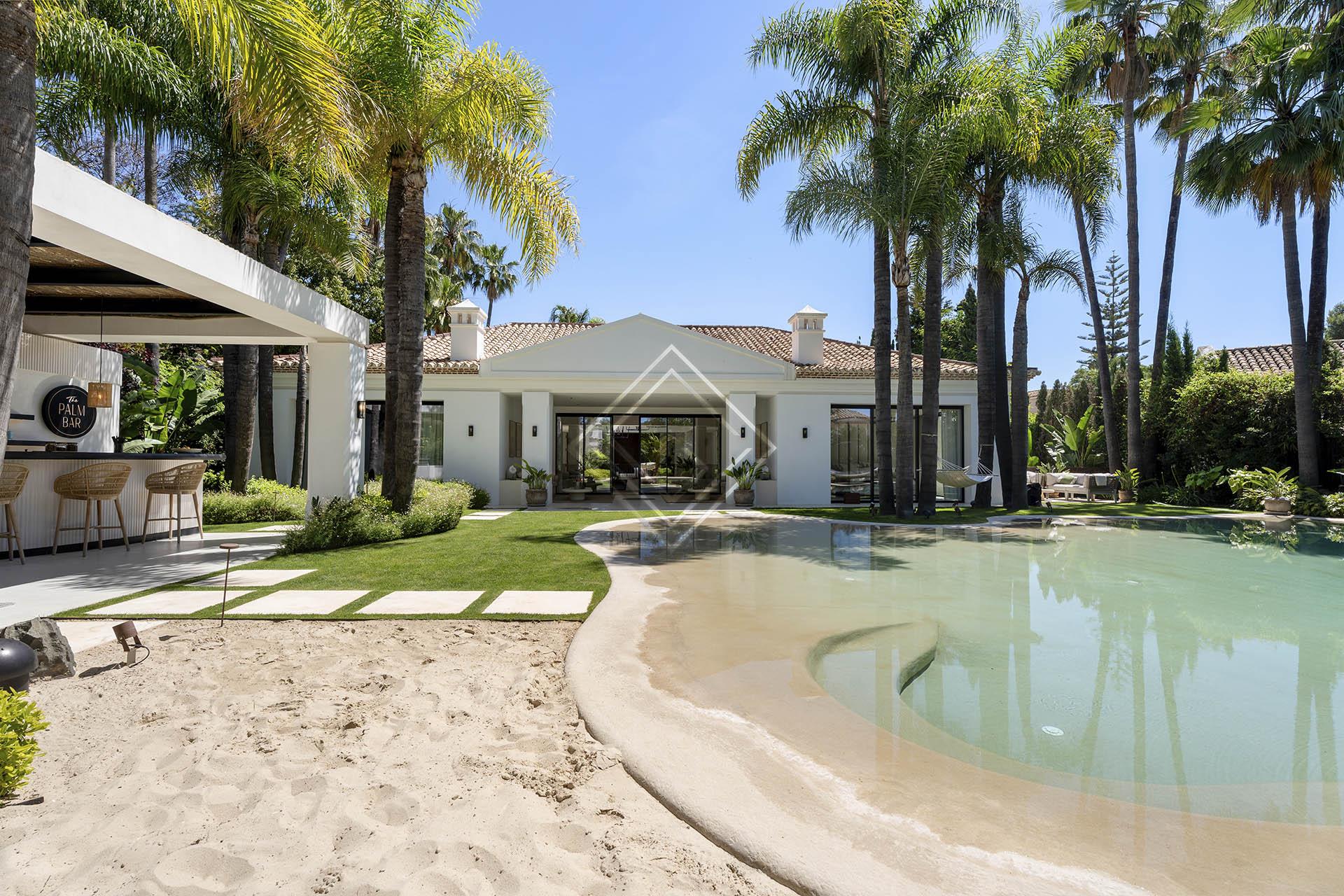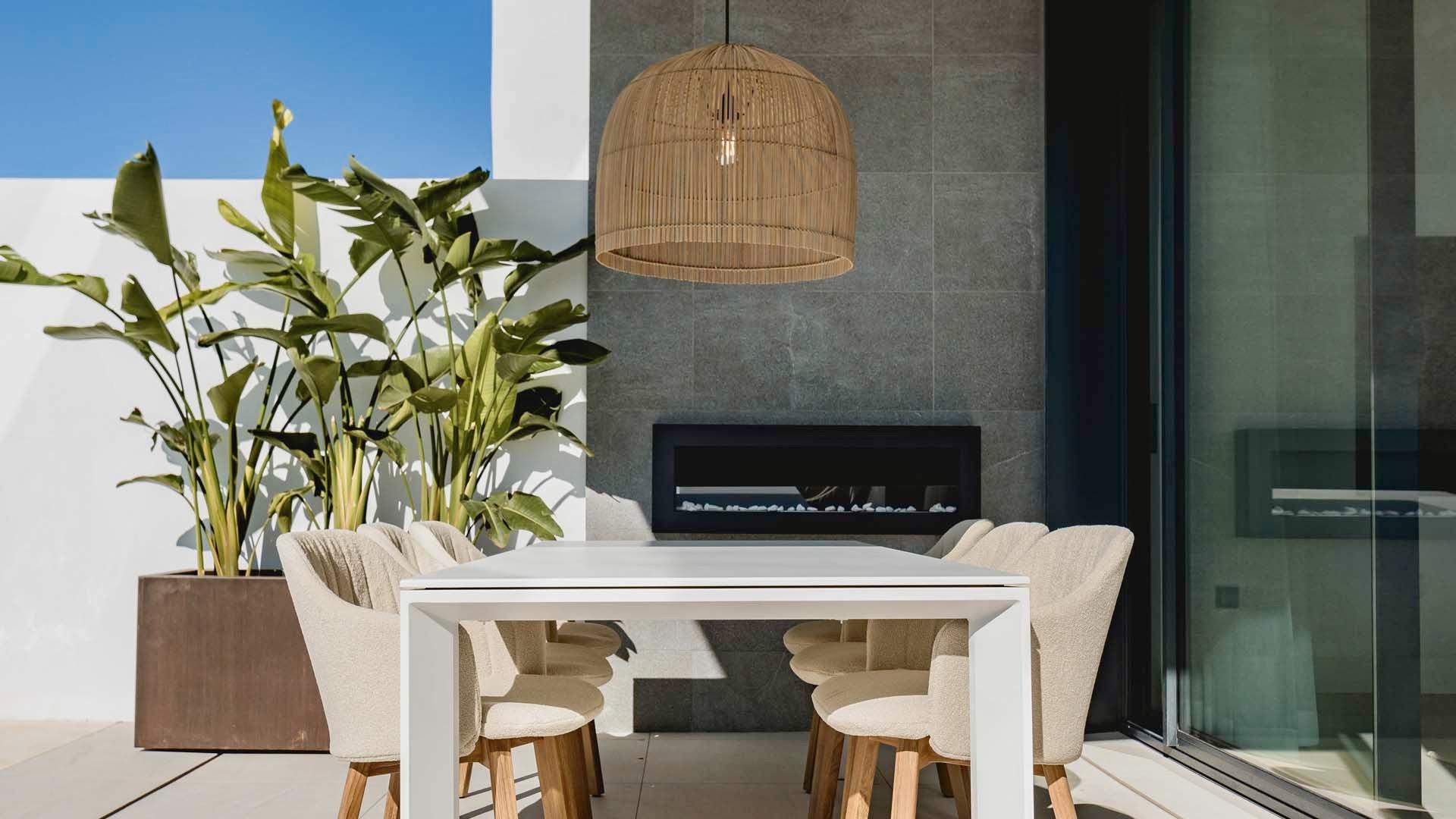
The fact that a property is listed on Airbnb, Vrbo or Booking does not prove that it is a viable tourist investment.
The listing confirms that someone has tried to market it. On its own, it does not show that the activity is currently running, that it is administratively viable, that the community of owners allows it or that the advertised income can be sustained after the sale.
Before buying a property for holiday rental in Marbella, four questions need to be separated: the property itself, the authorisation, day-to-day operation and profitability.
A previous listing is not a licence
You may come across a property for sale that is also listed, or has been listed, as holiday accommodation.
That history is useful. It shows how the property has been presented, what capacity has been offered and what type of guest has been targeted.
But it should not be taken as sufficient proof that the buyer will be able to continue the same activity.
The listing may be out of date. The activity may have stopped. The operator may not be the owner. The advertised capacity may not match the authorised capacity.
That is why documents should be requested, not sales pitches.
Tourist registration is only one part
In Andalusia, operating a holiday rental property requires compliance with tourism, planning and habitability requirements.
The responsible declaration and any administrative registration do not replace the municipal checks. Nor do they resolve planning incompatibilities or restrictions imposed by the community of owners.
Before buying, the following should be reviewed: the identity of the owner and of the operator, the current status of the property in the Andalusian Tourism Register, the declared capacity and bedrooms, planning compatibility, the community statutes and resolutions, the documentation required for marketing and any inspections or formal notices.
The regulations have changed over recent years. A registration number obtained in the past should not be taken as sufficient without checking whether it is still valid and what it covers.
The community of owners can be decisive
When the property is part of a building or development under horizontal property, the community must be analysed before assessing the business.
It is not enough to ask whether there are other holiday rentals in the development. Some activities may have started under different frameworks, later resolutions or situations that have not yet been reviewed.
The registered statutes, the relevant minutes and the corresponding community certificate should all be examined.
It is also important to understand the practical rules: access, keys, use of the pools, quiet hours, parking, guest check-in and neighbourly coexistence.
An operation can be legally possible and, at the same time, difficult to run if the relationship with the community creates ongoing conflict.
Bedrooms do not automatically mean capacity
A seven-bedroom property cannot automatically be marketed as accommodation for fourteen people.
Capacity depends on the floor area, the layout, the number of bathrooms, habitability conditions and the applicable administrative declaration.
It should also be checked whether every space used as a bedroom is recognised as such in the property’s documentation.
A converted basement, an auxiliary room or a space added during a renovation may work physically as a bedroom without being officially recognised as one.
The review should compare what has actually been built with the Land Registry, the Cadastre, the plans and the planning history. In our article on registered, cadastral and actual floor area we explain why these figures are not the same.
The tourist product needs specific demand
Once the administrative viability has been confirmed, the market needs to be studied.
A large property with a garden and pool may appeal to large families, groups who want to stay together or stays linked to holiday periods.
However, having many bedrooms does not guarantee high occupancy.
The analysis should cover the real demand for that capacity, seasonality, the achievable average rate, the usual length of bookings, comparable competition, dependence on platforms, the location in relation to the beach, restaurants and services, and any nuisance caused by traffic, noise or access.
The right comparable is not just any holiday villa in Marbella. It must offer a similar location, capacity, outdoor space, condition and experience.
Advertised income must be proven
The relevant figure is not the nightly rate shown on a platform on a given date.
The analysis should be based on actual bookings, occupancy, average rate, cancellations and seasonality. It is also worth distinguishing between gross income, the owner’s net income and the amounts charged by the management company.
Where there is a track record, the following should be requested: platform statements, management reports, booking calendars, declared turnover, operating costs, management contracts and any extraordinary incidents.
If this data is not available, profitability has not been demonstrated. A hypothesis can be drawn up, but it should be presented as such.
The renovation must be designed for letting
A property intended for holiday rental is not renovated in exactly the same way as a private residence.
The layout must withstand intensive use, make cleaning easier and reduce maintenance points. The durability of materials, storage, zoned climate control, hot water, acoustics and the ratio of bedrooms to bathrooms all matter.
Pool safety, outdoor lighting, access and the ability to welcome guests without interfering with private service areas should also be considered.
A visually attractive renovation can fail operationally if it requires too much maintenance or if the installations cannot cope with the capacity offered.
Costs change the numbers
Gross income is not profitability.
A realistic account should include management and marketing, platform fees, cleaning and laundry, utilities, garden and pool upkeep, maintenance, insurance, community fees and taxes, vacant periods, financing, acquisition costs, renovation, furniture and contingencies.
In large properties, utilities, climate control and outdoor maintenance can absorb a significant share of the income.
Buying first and checking later is the wrong order
The holiday rental case should be studied before signing a purchase commitment without sufficient conditions.
The sensible order is to validate the property, check administrative viability, study demand, budget the renovation and only then build the financial scenarios.
The result may confirm the investment or rule it out. Both conclusions are useful.
At GV Marbella we combine property analysis with technical expertise to assess the home, the renovation and its position in the market. If you are considering a property for holiday letting, you can contact our team directly.
Regulations and administrative requirements must be checked for each property at the time of the transaction. This information is for guidance only and is not legal or contractual advice.