Buying a plot in Marbella may seem a simpler decision than buying a finished home. There are no layouts to rule out, no materials to replace and no previous renovations to interpret. There is only the land and the possibility of building on it.
That is precisely why the analysis has to be more rigorous.
A plot is not valued solely on its size, its views or the name of the residential development. Its true value depends on what it allows you to build, the cost of doing so and the quality of life the future villa will be able to offer.
Two neighbouring and apparently similar plots can lead to completely different projects, budgets and final values.
Location does not end with the name of the area
Sierra Blanca, Nueva Andalucía, Cascada de Camoján, Marbella East or Benahavís help to place a plot within the market. However, the name of the area does not explain its exact position.
You need to analyse the street, the elevation, the traffic, the distance to the main access roads and the relationship with the neighbouring plots. The daily journey to schools, the beach, the airport, restaurants or sports facilities also matters.
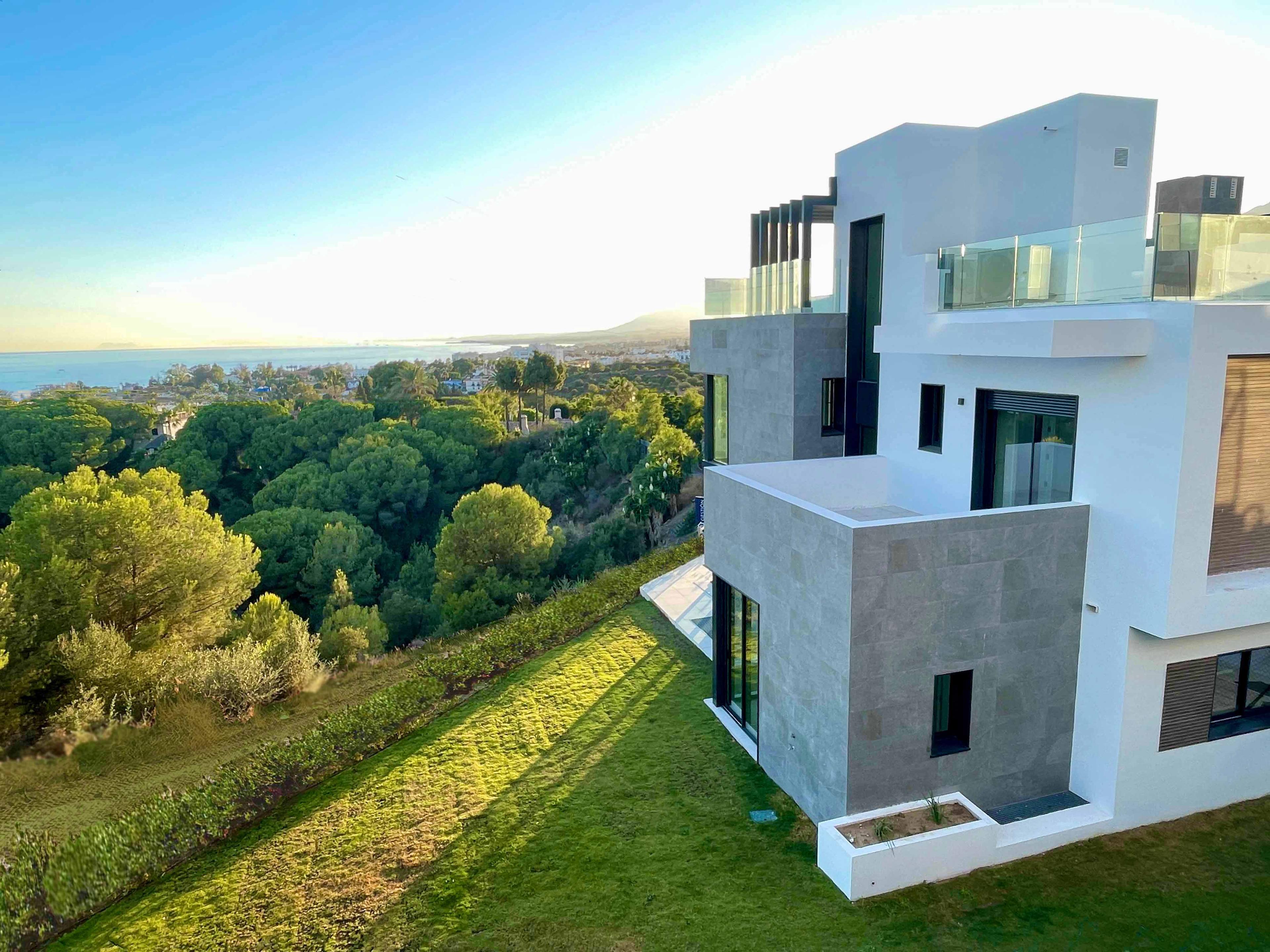
This can be seen in elevated areas such as Sierra Blanca, where two nearby plots can offer very different possibilities depending on their slope, orientation, access, privacy and relationship with the surrounding buildings.
The micro-location determines what kind of home can work and which buyer will be able to appreciate it in the future.
Before drawing, you need to know what can be built
The size of the plot is not the size of the future villa.
Buildability, site coverage, height, setbacks, number of storeys and the specific conditions of the plot determine the permitted volume. To these rules may be added easements, legal encumbrances, conditions set by the development or existing features that must be preserved.
A large plot may allow a smaller house than expected. Another, apparently more limited, may accommodate a very efficient project if its geometry and planning rules are favourable.
That is why the first image of the future villa should not be a render. It should be a technical study that translates the applicable regulations into real possibilities.
Geometry can matter more than square metres
Not all plots of the same size offer the same freedom.
A regular shape makes it easier to position the house, the access, the garden and the pool. A narrow or fragmented plot, or one with awkward setbacks, may force the building into an unfavourable part of the site.
It is also worth studying where the access point is and how the approach to the house must be resolved. A complex entrance can use up space, require substantial walls and condition the relationship between the house and the garden.
The question is not only how many square metres the plot has. It is how many of them can be used coherently.
Slope creates views, but also costs
Many of the best views in Marbella come from elevated positions. That advantage usually goes hand in hand with more demanding topography.
A slope may require earthworks, retaining walls, complex foundations, ramps, lifts and a villa organised over several levels. These solutions can produce extraordinary architecture, but they can also increase the budget and lengthen construction.
A sloping plot is not necessarily worse than a flat one. Its value depends on whether the slope can be turned into views, privacy and usable outdoor spaces without making the house an uncomfortable succession of floors.
The cost of the land must be analysed together with the cost of making it liveable.
Today's views are not always tomorrow's views
Seeing the sea from an empty plot makes a powerful impression. However, it is necessary to study what might happen around it.
The plots below may still be undeveloped. Vegetation may grow. A future building may alter a view that today seems completely open.
You should also check from which level the views will actually be enjoyed. The experience of standing on the land may not match the elevation of the future main floor.
Orientation adds another dimension. The most spectacular views do not always coincide with the best light, the greatest protection from the sun or the most comfortable use of the terraces.
In our guide on how orientation affects the comfort and value of a home in Marbella we explain why this analysis should be carried out before deciding on the layout.
Infrastructure and the development are also part of the project
Before buying, it is advisable to check the real access conditions and the availability of the necessary infrastructure.
Sewerage, water supply, electricity, telecommunications, drainage and the connection to the public road may seem secondary to the views or the architecture. However, a shortcoming or a particularly complex solution can have significant consequences for the budget.
In established gated communities, the community rules, service charges, access controls and the conditions applicable to building works must also be analysed.
A plot in a high-end setting needs a construction process that is compatible with the way that setting operates.
The project must respond to a real buyer
Building the largest villa permitted does not always produce the most valuable property.
The right scale depends on the area, the plot and the profile of demand. A home intended for a resident family needs to meet different needs from an international second home. The number of bedrooms, the service areas, maintenance, garaging and the relationship between inside and outside must all be coherent.
Overly personal architecture can be magnificent for the person who commissions it and difficult for the market to interpret. An overly generic solution can waste what made the plot exceptional.
The best project strikes a balance between identity, functionality and future demand.
Budget and timescale should be studied before setting the value of the land
The purchase price is only the first part of the investment.
The analysis should cover technical studies, design, licences, construction, internal site works, landscaping, installations, fees, taxes, financing, contingencies and time.
Two plots with the same price can involve very different final investments. Topography, ground conditions, walls, access or utility connections can change the equation even before materials are chosen.
The cost of time must also be considered. A transaction that requires planning or technical uncertainties to be resolved can tie up capital for longer than another that appears more expensive but is ready to proceed.
How an owner can defend the value of their plot
Owners should not limit their presentation to size, location and views.
To defend the value properly, it helps to have well-organised information: planning status, applicable parameters, topography, access, infrastructure and reasonable options for siting the house.
This is not about promising a villa that does not yet exist. It is about reducing uncertainty and allowing the buyer to understand the potential of the land.
A well-explained plot no longer competes on price alone. The buyer can picture which project makes sense, which difficulties will need to be resolved and why that particular position is difficult to reproduce.
The value lies in what the plot allows you to create
Buying a plot requires looking at the land as it is and the future home at the same time.
Location, planning rules, geometry, slope, orientation, views, infrastructure and budget should all form part of a single decision. Analysing them separately can result in a purchase that looks attractive on paper but proves incoherent once the project begins.
As we explained when analysing why two similar villas can have very different values, the market does not value square metres alone. It values the relationship between plot, architecture, privacy, quality and location.
At GV Marbella we combine real estate expertise and training as architects to analyse that relationship before the design or the price obscure the important questions.
If you are considering buying or selling a plot in Marbella, you can contact our team directly. We will study its position, its potential and the type of project capable of turning it into a property of lasting value.