Finding a home, agreeing the price and shaking hands does not mean the sale is closed.
Several weeks usually pass between that initial agreement and the signing of the deed. During that time, the property's documentation must be reviewed, the financing arranged, the source of funds evidenced and the transaction coordinated with lawyers, banks and the notary.
The deposit contract (contrato de arras) serves to organise that period and set down in writing the commitments made by the buyer and the seller.
It is not simply a receipt for a sum paid. It is a valid and binding private contract. That is why, before signing it, both parties must understand what they are agreeing, which matters remain outstanding and what will happen if the sale is ultimately not completed.
What is a deposit contract?
The deposit contract is a private agreement that the buyer and seller can sign before executing the public deed of sale.
It identifies the property, sets the price, fixes the deadline for completing the transaction and records the sum the buyer pays at that point. That sum will be deducted from the price when the deed is signed.
A deposit contract is not compulsory. The parties could complete the sale directly before a notary. However, it is useful when they need an interim period to prepare the transaction and want to prevent either of them from walking away from the agreement without bearing the agreed consequences.
Although the public deed is signed later, the deposit contract takes effect from the moment it is signed. The notary's later involvement does not turn an informal agreement into a binding one: the parties are already bound by the private document.
What is it for?
For the buyer, it secures a property for a set period while they arrange financing, complete any outstanding checks and prepare for signing.
For the seller, it shows that there is a buyer who has made a real financial commitment and allows the home to be taken off the market with defined consequences if the transaction does not proceed.
For both parties, it sets out the essential elements of the sale: the identity and capacity of the buyers and sellers; the land registry and cadastral identification of the property; the price; the sum paid; the deadline for signing the deed; the method of payment; the allocation of costs and taxes; the status of charges and occupants; and the conditions still to be met.
The real value of a deposit contract lies not only in handing over money. It lies in removing ambiguities before a dispute arises.
The sum paid does not have to be 10%
In many sales around 10% of the price is paid, but there is no general rule requiring that percentage.
The sum can be higher or lower if the parties so agree. It should bear a relationship to the value of the transaction, the time that will elapse until the deed and the risk each party takes on.
On a €3M home, for example, paying 10% means committing €300,000. It should not be treated as an administrative formality, nor transferred before checking who is entitled to sell, which property is being bought and under what conditions the money could be recovered.
How is the agreed sum paid?
The usual procedure is for the buyer, on signing the deposit contract, to transfer the agreed sum directly to the seller's bank account.
The contract should identify that account, set the deadline for making the transfer and record that the sum paid forms part of the total purchase price.
In some transactions, the parties agree to deposit the money in a third-party account managed by a lawyer until certain conditions are met. This is a valid option, but it is not the most common procedure and must be expressly provided for.
On the date of the deed, the sum paid as a deposit is deducted from the price and the buyer pays only the balance.
Not all deposits have the same consequences
Calling the contract an “arras” contract is not enough to determine what happens if the transaction does not go ahead. The document must state clearly what type of deposit it is.
Confirmatory deposit (arras confirmatorias)
A confirmatory deposit evidences that the sale has been agreed and that the sum paid is a payment on account of the price.
It does not automatically give the parties the right to withdraw by forfeiting the deposit or returning double. If one party defaults, the other can demand performance of the contract or seek its termination, as well as claiming any damages due.
Penitential deposit (arras penitenciales)
A penitential deposit allows either party to withdraw from the sale by accepting a financial consequence known in advance.
Article 1454 of the Spanish Civil Code provides that, if the buyer withdraws, they forfeit the sum paid. If the seller withdraws, they must return it twice over.
This arrangement must be expressly agreed. It is unwise to assume it will apply simply because the document uses the word “arras”. The wording must make clear that the parties acknowledge the right to withdraw and accept the consequences of Article 1454.
Penalty deposit (arras penales)
A penalty deposit serves both as a guarantee of performance and as a financial penalty for default.
The clause may provide that the defaulting party will forfeit a specified sum or must return it with an increase. Unlike a penitential deposit, its purpose is not necessarily to offer a voluntary way out of the contract, but to penalise the breach of an obligation that should have been performed.
To know whether the penalty replaces any additional claim or can be combined with a demand for performance and damages, you need to read the specific clause.
What should be checked before signing?
The right order is not to pay the deposit first and review the property afterwards.
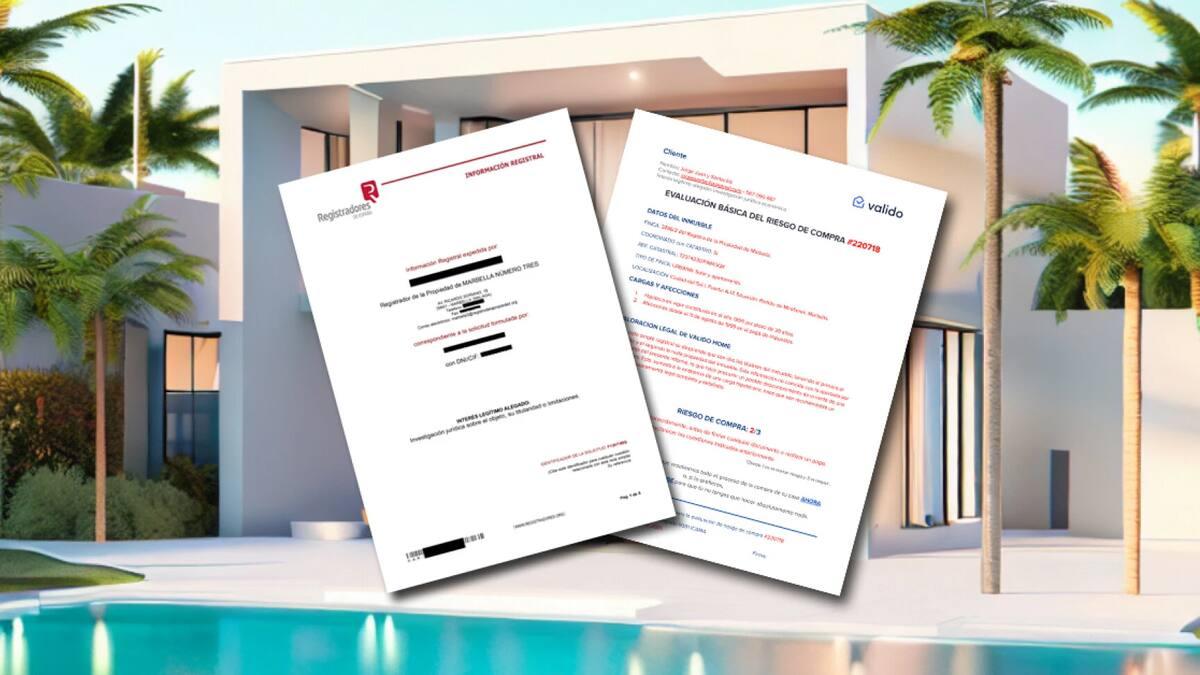
Before committing a significant sum, the buyer should at least have an up-to-date land registry extract (nota simple) and check the seller's identity, ownership and capacity. They should also know the registered charges, the occupancy situation, any community fees or IBI (property tax) owed, and any planning or technical circumstances that could change their decision.
For a villa, the Land Registry, the Cadastre and the physical reality should be compared; building, extension and renovation licences checked; its planning status analysed; and it should be established whether pools, basements, porches or other areas are properly documented.
For an apartment or duplex, the by-laws, recent minutes of the community of owners, approved special levies and the legal status of terraces, gardens or pools for private use should also be reviewed.
For example, when analysing a duplex with a terrace and private pool on the Golden Mile, it is not enough to describe its floor areas. The contract must correctly identify the property, its appurtenances and outdoor spaces, and the prior review must clarify their legal nature and their relationship with the community.
Our article on which documents should be reviewed before signing a sale covers this stage in greater detail.
If an important check cannot be completed before the deposit contract, the contract should turn it into an express condition, with a defined deadline and consequence.
How a deposit contract is carried out
Performance begins when the parties sign the document and the agreed sum is paid.
From that point, the buyer and seller must carry out the steps and meet the deadlines provided for. The seller prepares the documentation and keeps the property in the agreed condition. The buyer completes the review, evidences their funds, arranges financing where applicable and prepares the balance payment.
During that period the deed is coordinated with the notary's office. Before signing, the property's registry status, the position regarding charges, the required certificates and the fulfilment of the conditions included in the deposit contract must be checked again.
On the agreed date, the parties appear before the notary or act through representatives with sufficient powers of attorney. The buyer pays the outstanding price, less the sum already paid, and the seller transfers ownership and possession as agreed.
The relevant taxes are then paid and the deed is submitted to the Land Registry.
What happens if one of the parties does not proceed?
It depends on the type of deposit and on the reason why the sale is not completed.
If a penitential deposit was agreed and the buyer decides to withdraw, they will forfeit the sum paid. If the seller withdraws, they must return it twice over.
But not every failed transaction is a voluntary withdrawal. The contract may make the sale conditional on obtaining financing, the cancellation of a charge, the delivery of a licence or a specific outcome from the legal, technical or planning review.
If the condition is properly drafted and is not met, the consequence may be termination of the contract and return of the sum, with no penalty for the buyer.
A useful condition must state what has to be checked, who must provide the information, what outcome is considered valid, by when it must be met and what happens if it is not.
Financing deserves particular attention. The fact that the buyer needs a mortgage does not in itself mean they can recover the deposit if the bank turns down the loan. That protection must be expressly included in the contract and its conditions defined.
A reservation and a deposit contract are not the same thing
A reservation is usually used to take a home off the market temporarily while the deposit contract is prepared or an offer is considered.
It normally involves a smaller sum and a shorter document. However, the name does not determine its effects. A poorly drafted “reservation” may already contain the essential elements of a sale and create broader obligations than the parties believe.
Before paying any sum, three questions must be clear: who receives the money, in what circumstances it is returned and what commitment each party makes.
The deposit contract must be tailored to the property and the transaction
A generic template can serve as a starting point, but it is no substitute for analysing the specific sale.
A cash buyer does not need the same clauses as one who depends on financing. Nor is buying a renovated home within a community the same as buying a villa with extensions, a property-owning company, a new build or a property that remains occupied.
In high-value transactions, the deposit contract must also reflect international banking timelines, documentation on the source of funds, powers of attorney, the furniture inventory and the necessary technical or planning checks.
At GV Marbella we work as architects specialising in prime real estate management. Our role is not to replace the lawyer or the notary, but to help ensure the property is properly understood before the buyer makes a financial commitment.
The best protection does not lie in filling the contract with clauses. It lies in identifying in good time what could affect the value, use or future transfer of the home and turning it into a clear condition of the transaction.
If you are considering a purchase, you can contact GV Marbella directly to analyse the property and coordinate the process with the relevant legal professionals.
This content is provided for information only and does not constitute individual legal advice. The type of deposit and its consequences must be reviewed for each specific transaction.